Why We Stopped Chasing Trends and Started Building a Core Line
Sometime around 2023, I started tracking how many personal care trends I was seeing move from TikTok to mainstream brand launches. Skin cycling. Slugging. Centella asiatica everything. Tranexamic acid. Azelaic acid goes mainstream. Bakuchiol as "natural retinol." Fermented skincare. Rice water. Snail mucin, somehow becoming a thing people are excited about.
The cycle kept accelerating. New trending ingredient, six months of product launches across every brand in the space, then on to the next thing. The shelf life of a trend in personal care had compressed from two or three years to six or eight months. Brands were reformulating or extending their lines constantly to stay relevant.
I watched this for a while and made a decision: we weren't going to do it.
What trend-chasing costs you
The obvious cost is formulation instability. When you add a trending ingredient to an existing formula, you change the formula. Sometimes the change is trivial. Sometimes it affects texture, stability, pH, or ingredient interactions in ways that take months of testing to fully understand. Brands that rush launches to catch a trend wave are frequently skipping that testing. The resulting products are less reliable than products that went through full stability and efficacy evaluation.
There's also the supply chain problem. Trendy ingredients get bought up. When bakuchiol became the ingredient of 2021, supply chains tightened, quality varied wildly as new suppliers rushed to market, and prices spiked. Brands that had built their formulations around bakuchiol as a core ingredient struggled to maintain quality and margin simultaneously. Brands that added it in response to trend pressure were working with whatever they could source.
Then there's the customer trust problem. If PureVibe line changes every six months to chase what's trending, you're implicitly communicating to your customers that last year's formula wasn't the best you could do. You're saying the product you sold them in 2023 is already obsolete. For some people, that's fine — they enjoy the novelty. For the customers we want to build a relationship with, it erodes trust in a way that's hard to recover from.
What we built instead
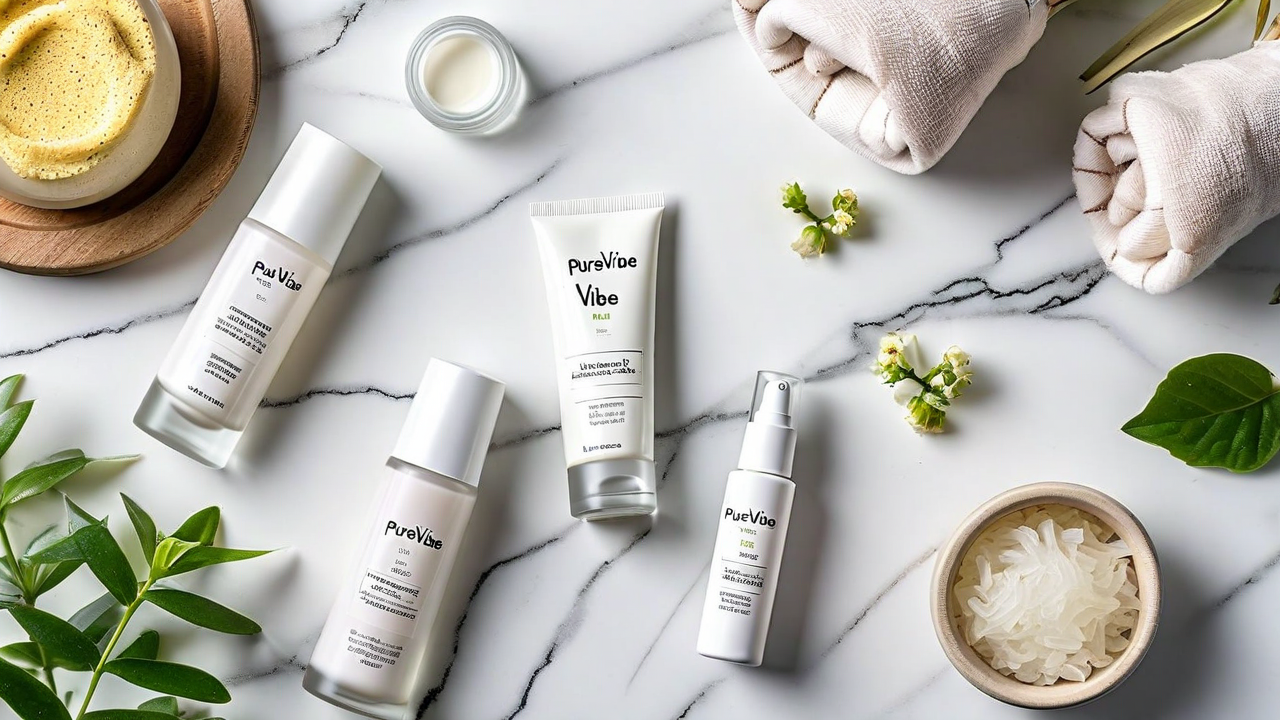
PureVibe has nine products. That's it. Nine products that we've been developing, testing, and refining for three years.
The line was designed to address the full routine without overlap: a cleanser, a toner, a vitamin C serum, a barrier moisturizer, an eye cream, a body lotion, a body butter, a hand cream, and a hair mask. Each product is formulated to do one thing exceptionally well. Nothing is there to fill a perceived gap in the market. Nothing was added because an ingredient was trending.
Our vitamin C serum uses ascorbyl glucoside — a stable, water-soluble form of vitamin C — rather than L-ascorbic acid, which is more potent but less stable and more sensitizing. L-ascorbic acid was the trendy form. Ascorbyl glucoside is the form that works reliably across skin types, holds up in a formula, and doesn't oxidize in the bottle before you use half of it. We chose the boring option because it performs better in practice.
Our barrier moisturizer was formulated around ceramides, niacinamide, panthenol, and allantoin. Not because these were trending when we developed it — though niacinamide certainly was — but because they're the ingredients with the strongest clinical evidence for barrier repair across a range of skin types. If they trend, fine. If they don't, fine. The evidence doesn't change based on what's popular.
The ingredient FOMO problem
I get emails — genuinely, multiple a week — from customers asking if we're going to add a product with [trending ingredient of the month]. And I understand the impulse. When you're reading about bakuchiol or tranexamic acid or retinal (not retinol, retinal) and you're excited about the evidence, you want your favorite brand to be working on it.
The honest answer is: we evaluate everything. We have a running list of ingredients that our formulation team watches, with literature reviews and sourcing assessments. Some will become PureVibe products eventually. Most won't — not because the ingredients aren't interesting, but because adding a tenth product to a nine-product line that was designed as a complete system requires more justification than "this ingredient has good research and good press right now."
If and when we add something to the core line, it will be because it fills a genuine gap for our customers — something the existing nine products don't address well — and because we've spent sufficient time on formulation and testing to believe it belongs there. Not because it had a week on TikTok.
The business case, honestly
Nine products is harder to market than a constantly refreshed line. You can't run "new and improved" announcements every quarter if you're committed to formula stability. You can't send excitement-generating emails about the trending ingredient you just added. Your social content can't ride cultural moments the way trend-reactive brands can.
What you can do is get really good at nine things. You can build a supply chain optimized for those nine formulas. You can run repeat stability testing and know your products intimately. You can talk to your customers about how to use the products they already own rather than selling them on the next thing.
Our reorder rate is 71%. Customers who stay for more than three months reorder at that rate. I think that number is related, at least partly, to the fact that when you find a routine that works, it keeps working. The formula doesn't change. The product your skin got used to is the same product in the next shipment.
That's what we're building. Not the most exciting brand in personal care. Not the one with the biggest launch calendar. The one that your skin trusts six months from now the same way it trusts it today.
Nine products. One complete routine.
PureVibe's core line is designed to work as a system. Find the ritual that fits your skin.
Shop the Collection